SaaS Development

SaaS development built around the product, not just the code.

We help founders and product teams turn SaaS ideas—and platforms that have outgrown their original build—into well-designed, scalable applications. Strategy, product design and engineering sit in one Manchester team, working with clients across the UK and worldwide. We haven't only built SaaS for other people: we built our own platform, scaled it globally and saw it acquired.

Almost 20 years of web and SaaS development. Our own SaaS platform, Resova, reached 1,000+ venues in 20+ countries before its acquisition by ClubSpeed.

Why it's different

Building SaaS is different from building a conventional website

A brochure website is largely finished when it launches. A SaaS product is only beginning. From the first release it has to hold accounts, remember state, enforce permissions, handle money, talk to other systems and keep doing all of that reliably while the customer base grows.

That changes the work. SaaS application development starts with product strategy rather than page templates: who the users are, what job they repeat every day, what the commercial model rewards, and which parts of the experience are worth getting right first. It then carries through into decisions that are difficult to reverse later—how tenants and data are separated, how roles and permissions behave, how billing fits the pricing model, and how the platform copes when usage doubles.

It also never really stops. SaaS product development is a cycle of shipping, measuring and improving, because customers reveal things no amount of research will. None of this makes generalist web development wrong; it simply solves a different problem. Choosing a team that has designed, engineered and operated SaaS is the point.

What we build

SaaS products designed to launch, scale and evolve

New SaaS products

You have a market and an idea of the product. We take it through discovery, definition, design and engineering into something real customers can subscribe to—so you find out whether it works from the market rather than from a spreadsheet.

SaaS MVPs and first releases

The hardest part of SaaS MVP development is deciding what to leave out. We help you cut the first release back to what proves the product, then build it properly so it becomes the foundation of the platform rather than something you replace.

Multi-tenant platforms

Multi-tenant SaaS development done well is invisible: every customer gets an environment that feels like theirs, their data stays separated, and one busy account never becomes everyone else's problem. We settle that model before writing features on top of it.

Customer and admin dashboards

The back office is where your customers spend their working day, and where your own team supports them. We design dashboards around the tasks people repeat most, so the product stays usable as the feature set grows.

Booking, commerce and payment platforms

Products that take money in front of customers leave no room for friction or doubt. We have built checkout and payment flows at volume, including the unglamorous parts—failed payments, refunds, changes of plan—that decide whether operators trust the platform.

Redevelopment and feature expansion

Not every project starts from nothing. We take on existing SaaS platforms that need a better interface, new capability or a more scalable foundation, and improve them in a sequence that keeps a live product earning throughout.

The advantage

Product thinking and engineering under one roof

A lot of SaaS projects lose time in the gaps between suppliers—a strategy deck handed to a design studio, designs handed to a development shop, and nobody accountable for the product as a whole. We keep the whole thing in one team, so the decisions made in discovery survive contact with the build.

Discovery and product definition

We start with users, commercial model, constraints and risk, and end with a defined scope and a roadmap you can actually fund.

UX and UI design

Prototypes of the core journeys, tested before engineering starts, so the expensive work is spent on a product people can already use.

Engineering

Iterative delivery by the same team that designed it, on an architecture chosen for how your product is likely to grow.

QA and security

Testing, review and sensible security practice built into delivery rather than bolted on before launch.

Launch and iteration

Deployment, monitoring and a working relationship that continues while the product grows and the roadmap changes.

Why Walker Thomason

We have built, operated and sold our own SaaS product, not only delivered them for clients.

Almost 20 years of web and SaaS development experience in one small, senior team.

Strategy, design and engineering in-house, so nothing is lost in the handover.

Platforms we've engineered run in over 20 countries and have processed billions of dollars in payments.

Proof

We have built SaaS from the inside

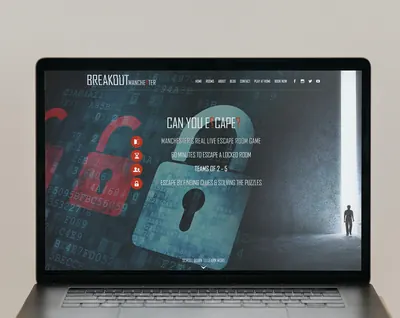
Resova began as a problem we ran into doing someone else's job. Breakout, one of our first clients, needed online booking for a new escape room venue. We went looking for a platform to integrate and found that nothing on the market fitted how attractions actually operate.

So we built it. We ran discovery across both user groups—the guests booking and the operators running the venue—and defined an MVP narrow enough to launch with Breakout: a fast, mobile-first guest checkout, and a back office where staff could manage bookings, schedules and payments without training. We prototyped both experiences before engineering them, then built the platform for multi-tenancy, high booking volumes and the security expected of a product handling customer data and card payments.

It launched alongside Breakout's opening and processed hundreds of bookings in its first weeks. Adoption spread well beyond escape rooms into the wider attractions market, and Resova went on to serve more than 1,000 venues across over 20 countries, processing billions of dollars in bookings and payments—before being acquired by ClubSpeed, the leading venue management software provider for family entertainment centres.

Everything on this page—the discovery, the MVP discipline, the tenancy and billing decisions, the long tail of iteration after launch—comes from having done it with our own product, and our own risk.

Read the Resova case study

Venues subscribed to Resova, the SaaS platform we designed and built.

Countries the platform serves around the globe.

$10B+

In payment volume processed across the SaaS products we've engineered.

Products we've built that were acquired by global software leaders.
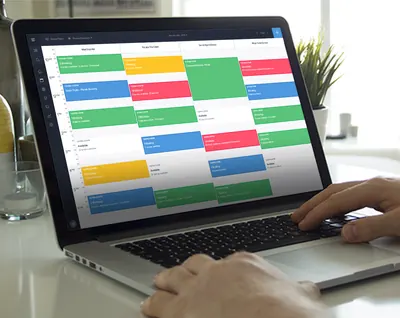
Resova operator back office showing bookings and schedules
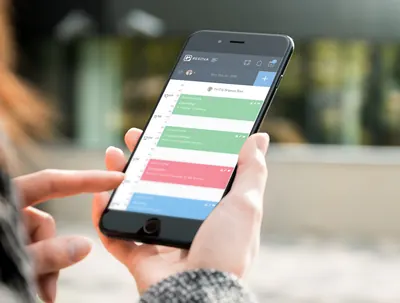
Resova mobile guest booking and checkout journey

Planning a SaaS product? Let's talk it through.

Services

End-to-end SaaS development services

Strategy & discovery

Before anything is designed, we work out what the product has to be. That means understanding the users and the job they are trying to do, the commercial model behind the subscription, the constraints you are working within, and the risks worth testing early. The output is a defined MVP, a prioritised roadmap and a technical direction—enough for you to make a funding decision with your eyes open.

  • Product discovery
  • User research
  • MVP definition
  • Roadmap planning
  • Journey mapping
  • Technical direction

Product and UX design

SaaS interfaces are used daily, often for hours, by people with a job to finish. We design for that: clear information hierarchy, workflows that match how the work is actually done, and an interface that stays coherent as features accumulate. We prototype the core journeys so you can use the product before it is engineered—the cheapest point at which to change your mind.

  • UX design
  • UI design
  • Prototyping
  • Design systems
  • Dashboard design
  • Mobile-first design

SaaS engineering

We build the application itself: the tenancy model, accounts and permissions, the core product workflows and the data behind them. We choose an architecture to suit the product rather than applying the same stack to every brief, and we deliver in iterations so you see working software early and often. The aim is a codebase that stays quick to change in year three, not only in month three.

  • Multi-tenant architecture
  • Authentication & roles
  • Web app development
  • Data modelling
  • Reporting & dashboards
  • Performance engineering

Integrations and payments

Most SaaS platforms have to earn money and exchange data with systems their customers already rely on. We build subscription and payment workflows—including trials, plan changes, failed payments, refunds and invoicing—and the APIs and integrations that connect your product to the rest of a customer's stack. We design those connections to degrade gracefully, so a third party having a bad day doesn't take your product down with it.

  • Subscription billing
  • Payment workflows
  • API development
  • Third-party integrations
  • Webhooks
  • Data import & export

QA, DevOps and security

A SaaS platform is a live service, so the work around the code matters as much as the code. We test through delivery rather than in a panic before launch, automate deployment so releases are routine, and monitor the platform once it's live. Security is handled as a running concern—access control, data handling, dependencies and infrastructure—rather than a certificate collected once.

  • Quality assurance (QA)
  • Automated testing
  • Cloud infrastructure
  • CI/CD & deployment
  • Monitoring
  • Application security
Process

From idea to launch — and beyond

Five stages, run as a loop rather than a relay. We work alongside your team throughout, and the later stages feed back into the earlier ones as the product meets real customers.

01

Discover

Goals, users, commercial model, constraints and the risks that could derail the product later.

02

Define

MVP scope, roadmap, user journeys and the technical approach that will support them.

03

Design

Prototype the core journeys and validate the product experience before engineering begins.

04

Build & test

Iterative engineering, integrations, QA, security and deployment, with working software throughout.

05

Launch & evolve

Monitoring, customer feedback, optimisation, new features and scaling as the platform grows.

Technical capability

The foundations a SaaS platform needs to grow

Some decisions are cheap to make early and expensive to change later. These are the ones we settle before building features on top of them.

Multi-tenant architecture

Almost every SaaS product serves many customers from one platform, and how you separate them shapes everything that follows. We decide early how customer data is isolated, how configuration differs between accounts, and how the platform behaves when one tenant is ten times the size of the rest. Getting this right at the start avoids the single most expensive category of SaaS rework: retrofitting tenancy onto a product that assumed one customer.

Authentication and permissions

Real customers have teams, and teams have roles. We build authentication and role-based permissions that reflect how your customers organise themselves—owners, managers, staff, read-only users—with the granularity the product genuinely needs rather than an access model that has to be redesigned the first time someone asks for a restricted login. Session handling, invitations and account recovery are treated as part of the product, not an afterthought.

Billing, payments and integrations

How you charge affects how you build. Subscriptions, usage-based pricing, per-seat plans and transaction fees each imply different data and different edge cases—trials ending, plans changing mid-cycle, payments failing, refunds being issued. We build billing to fit the commercial model, and connect the platform to the third-party systems your customers already use through well-designed APIs, webhooks and integrations that fail safely.

Performance, security and infrastructure

A SaaS platform has to stay quick and available while usage grows, often unevenly. We design data and reporting so they hold up as records accumulate, plan infrastructure that can scale with demand, and automate deployment so shipping is routine rather than an event. Security runs through all of it—access control, careful handling of customer and payment data, dependency management and monitoring once the platform is live.

Who we work with

SaaS development for new products and established platforms

Founders and new ventures

You can see the opportunity clearly but the product is still a set of assumptions, and you need to reach the market without spending the whole budget finding out you were half right.

We help you define the smallest product that proves the idea, design and build it properly, and get it in front of paying customers—then use what they do to decide what comes next.

Growing SaaS businesses

The product works and customers are paying, but shipping has slowed, the interface is straining under features it was never designed for, and larger customers are asking for things the platform can't yet do.

We come in alongside your team to improve the experience, add capability and strengthen the foundations, sequenced so the live product keeps earning throughout.

Established organisations

You have a market, an operation and often a process already running on spreadsheets or ageing internal systems—and a plan to turn that into a proper digital product for customers or partners.

We bring the product and engineering capability to make that a platform, working within the governance, security and integration requirements you already have.

Related work

SaaS and digital products built by Walker Thomason

  • Resova multi-tenant SaaS booking platform
    Resova SaaS

    A multi-tenant SaaS platform we defined, designed and engineered from MVP to global scale.

  • Breakout escape room booking website
    Breakout Website

    The booking-led project that surfaced the market gap Resova was built to fill.

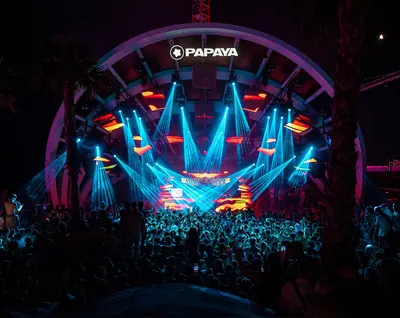
  • Hideout Festival ticketing and ecommerce platform
    Hideout Festival Ecommerce

    High-demand ticketing and commerce built to hold up under concentrated peaks of traffic.

FAQs

SaaS development FAQs

There is no single price, because cost follows scope. A focused MVP with one core workflow, simple permissions and a single payment integration sits at one end of the range; a multi-tenant platform with complex roles, reporting, several third-party integrations and strict data requirements sits at the other. The things that move the number most are the number of distinct user journeys, how much integration work is involved, and how much design and discovery is needed before building starts. We would rather scope properly than quote blind, so we start with a short discovery conversation and give you a realistic range against a defined scope.

It depends entirely on what you are building and how much of it has to exist on day one. A tightly defined MVP is a very different proposition to a full platform with billing, reporting and integrations. The most useful thing we can do early is help you separate what the first release genuinely needs from what can follow it, because that decision changes the timeline more than anything else. We give estimates after discovery and MVP definition, once the scope, user journeys and technical approach are agreed, rather than committing to a date before anyone knows what is being built.

Yes, and it is often the most valuable part of the engagement. We run discovery to understand the users, the commercial model and the constraints, then prioritise ruthlessly: which journeys prove the product works, which can wait, and which are assumptions that need testing rather than building. From there we map the core user journeys, prototype them so you can see and use the product before it is engineered, and agree a technical approach that will not have to be thrown away when the product grows.

Yes. Resova is a multi-tenant platform serving over 1,000 venues across more than 20 countries, so we have run these decisions in production rather than only on paper. Tenancy is worth settling early: how customer data is separated, how roles and permissions work inside each account, how configuration differs between tenants, and how the platform behaves when one customer is far larger than the rest. Retrofitting a tenancy model onto a product that assumed a single customer is one of the more expensive corrections in SaaS, so we treat it as an architecture decision, not a feature.

Often, yes. We take on inherited products where the original team has moved on, where the interface has fallen behind what customers now expect, or where new features have become slow and risky to ship. We start by understanding the current codebase, data model and infrastructure, then agree a sequence: what to improve first, what to leave alone, and what genuinely needs rebuilding. The aim is to keep a live product stable and earning while it improves, not to stop everything for a rewrite.

Yes. Most SaaS products earn through recurring subscriptions, transactions or both, and most of them have to exchange data with systems their customers already use. We build subscription and payment workflows, including the parts that are easy to underestimate: trials, upgrades and downgrades, failed payments, refunds and invoicing. We also build and consume APIs so your platform can integrate with the tools your customers depend on, and we design those integrations to fail safely rather than take the product down with them.

Launch is where a SaaS product starts, not where it finishes. Once it is live we monitor performance and errors, watch how people actually use it, and work through a roadmap of improvements and new features with you. Real customers always reveal things that research and prototyping do not, so the early months after launch are usually the most valuable period for learning. We support products long term, scaling infrastructure and evolving the platform as the customer base grows.

We are based in Manchester, in the UK. We work with clients across the UK and internationally, and we are used to collaborating remotely with distributed teams. If you are local and would prefer to work through discovery or design in person, we are happy to do that too.

Have a SaaS product in mind?

Whether it's a new product, an MVP you need to define, or an existing platform that has outgrown its original build, we'd like to hear about it. The first step is a conversation to understand the product, your goals and where you've got to so far—no pitch deck required.

Discuss your SaaS project

Prefer email? hello@walkerthomason.com

Scroll