We design and build SaaS platforms, web applications and bespoke software from Manchester, for clients here and around the world. Strategy, product design and engineering sit in one small senior team—and we haven't only built software for other people. We built our own platform, ran it as a business and saw it acquired.
20+ years building software from Manchester. Resova started here and reached 1,000+ venues in 20+ countries before its acquisition by ClubSpeed.
We've been building software in Manchester for over 20 years. The city is where the work started and where the team still sits, but the software has travelled a lot further than that: platforms we designed and engineered run in more than 20 countries and have processed billions of dollars in payments.
The most useful illustration is Resova. It began with a Manchester client—Breakout, opening their first escape room venue in the city—who needed online booking that didn't exist yet. We built it, then kept building it: it grew into a platform serving over 1,000 venues worldwide and was eventually acquired by ClubSpeed. That is a different kind of experience from delivering a brief and moving on. We've carried the commercial risk, supported the customers, and lived with the architecture decisions for years afterwards.
Being local matters if you'd like a team you can actually sit down with—for discovery, for design reviews, or when something needs working through properly rather than over email. It has never limited who we work with. Most projects run as a mix of in-person sessions where they genuinely help and remote work for everything else.
Subscription products serving many customers from one platform. Our SaaS development work covers tenancy, billing, permissions and the decisions that are expensive to reverse.
Customer portals, dashboards and operational systems people use daily. See how we approach web app development in detail.
The systems a business actually runs on, replacing spreadsheets, shared inboxes and manual steps that quietly cost hours a week and break the moment someone is away.
Software that takes money in front of customers, built by a team that has run checkout and payment flows at volume—including the parts that decide whether people trust it.
Connecting your software to the systems it has to live alongside—payment providers, CRMs, accounting tools, internal services—with connections designed to fail safely.
Taking on software the original team has moved on from, improving it in a sequence that keeps it working, and supporting it properly once it's yours again.
Software projects lose most of their time in the gaps between suppliers—a specification handed to a design studio, designs handed to a development shop, and nobody accountable for whether the finished thing does the job. We keep it in one team, and the people you meet at the start are the people who build it.
Users, workflows, commercial context and risk, ending with a scope you can fund and a technical direction that fits it.
Prototypes of the journeys that matter most, tested before engineering starts—the cheapest point at which to change your mind.
Iterative delivery by the same team that designed it, on an architecture chosen for how the software is likely to grow.
Testing, review and sensible security practice built into delivery rather than bolted on before launch.
Deployment, monitoring and a working relationship that continues while the software grows and the priorities change.
Based in Manchester for 20+ years, working with clients across the UK and worldwide.
We've built, operated and sold our own software product, not only delivered them for clients.
Strategy, design and engineering in-house, so nothing is lost in the handover.
Platforms we've engineered run in over 20 countries and have processed billions of dollars in payments.
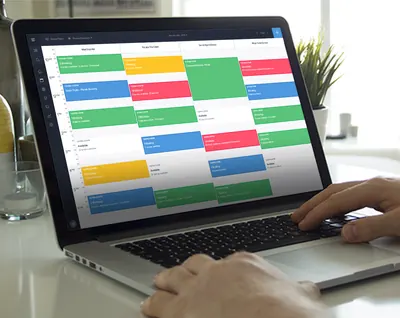
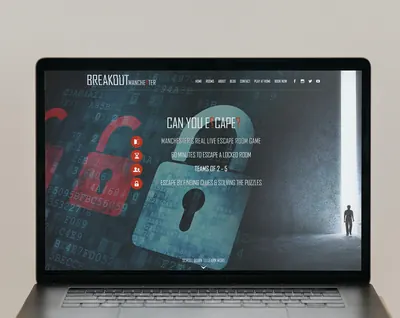
Breakout opened their first escape room in Manchester and needed a website and online booking to go with it. We looked for a booking platform to integrate and found nothing that fitted how attractions actually operate, so we built one. That became Resova: a guest checkout fast enough to use on a phone, and a back office where venue staff could manage bookings, schedules and payments without training.
It launched alongside Breakout's opening, processed hundreds of bookings in its first weeks, then spread well beyond escape rooms into the wider attractions market—over 1,000 venues in more than 20 countries, billions of dollars in bookings and payments, and eventually an acquisition by ClubSpeed. Breakout, meanwhile, franchised into six countries and is still one of Manchester's top-rated attractions.
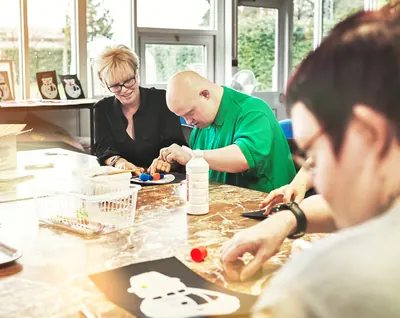
The same team also built the ticketing and accommodation platform behind Hideout Festival, which sold out completely and was then adapted across the wider Ticket Arena and Event Genius portfolio, and a fully accessible website for The Pavilion Project, a community organisation supporting adults with learning disabilities.
See the case studiesYears building software from Manchester.
Venues running on a platform we designed and built here.
In payment volume processed across the software we've engineered.
Products we've built that were acquired by global software leaders.
Before anything gets designed we work out what the software has to do: the people who'll use it and the job they're trying to finish, the process it replaces, the systems it has to talk to, and the commercial reality around it. The output is a defined scope, a prioritised roadmap and a technical direction—enough to make a funding decision with your eyes open rather than a proposal that hides the hard questions until later.
Business software is used daily, often for hours, by people with work to finish. We design for that: a clear hierarchy, screens that match how the job is actually done, and an interface that stays coherent as features accumulate. We prototype the core journeys so you can use the software before it's engineered—the cheapest possible point to find out something doesn't work the way everyone assumed.
We build the software itself: the data model, accounts and permissions, the core workflows and the screens people live in. We choose an architecture to suit the product rather than applying the same stack to every brief, and we deliver in iterations so you see working software early and often. The aim is a codebase that's still quick to change in year three, not only in month three.
Most software has to exchange data with systems people already rely on, and all of it has to keep running once it's live. We build the APIs and integrations, test through delivery rather than in a panic before launch, automate deployment so releases are routine, and monitor the software afterwards. Security is treated as a running concern—access control, data handling, dependencies and infrastructure—rather than a certificate collected once.
Proximity is only worth something if it changes how the work goes. These are the parts where, in our experience, it genuinely does.
The early sessions—mapping how the work is done now, arguing about what the first release should include—are faster and more honest in person. If you're in or near Manchester, we'll come to you for the parts that benefit from it.
We're a small senior team, so you deal directly with the people designing and engineering your software rather than an account manager relaying questions to someone you never meet.
No overnight gap between a question and an answer, and no waiting a day to unblock something small. It sounds minor until you've run a project where every exchange costs 24 hours.
Several of the projects on this site have run for years rather than months. The measure of a software partner is whether they're still useful in year three, and a local team has more reason to be.
You can see the opportunity clearly, but the product is still a set of assumptions and the budget won't survive building all of them.
We help define the smallest version that proves it, build it properly, and get it in front of real users—then use what they do to decide what comes next.
The business has outgrown the systems it started with, and the workarounds holding everything together have become a risk of their own.
We build the software that replaces them, sequenced so the operation keeps running while it changes underneath.
You have the market, the operation and the domain expertise, but no in-house capability to turn a process into a proper product.
We bring the product and engineering side, working within the governance, security and integration requirements you already have.
Started for a Manchester venue, ended up serving over 1,000 worldwide.
A Manchester escape room that franchised into six countries.
An accessible site for a community organisation, still going a decade on.
We are based in Manchester and have worked from the city for over 20 years. Our first client projects were Manchester businesses, and Resova—the booking platform we built, ran and sold—started life here before spreading to venues in more than 20 countries. If you are local and would rather work through discovery, design reviews or planning in person, we are happy to do that. If you would rather keep everything remote, that works too: most of our client work runs that way.
No. We work with clients across the UK and internationally, and have done for years. Being in Manchester matters for the clients who want a team they can sit down with, and for the simple fact that we understand the market we have worked in for two decades. It has never been a restriction on who we take on. Most projects run as a mix: some sessions in person where that genuinely helps, the rest remote, with the same working rhythm either way.
Mostly software that people use to do a job: SaaS platforms with subscriptions and multiple customer accounts, web applications like customer portals, booking systems and operational tools, ecommerce and payment platforms, and bespoke internal software replacing spreadsheets or ageing systems. We also take on existing products that need rebuilding, extending or bringing back up to standard. What we do not do is one-off brochure websites with no application behind them—there are other Manchester agencies better suited to that, and we would rather tell you so early.
Cost follows scope, so we give a range against a defined brief rather than a figure up front. The things that move it most are how many distinct user journeys there are, how many roles and permission levels the software needs, how much integration work is involved, and how much discovery and design is needed before engineering starts. A focused internal tool is a different proposition to a customer-facing platform with billing, reporting and several integrations. We would rather scope it properly than quote blind, so we start with a conversation and come back with a realistic range once the scope is clear.
It depends almost entirely on how much has to exist in the first release, which is the single decision that changes a timeline most. Often the most valuable early work is separating what the first version genuinely needs from what can follow it. We estimate after discovery and definition, once scope, user journeys and the technical approach are agreed, and then deliver in iterations so you see working software early and regularly rather than waiting for one handover at the end.
Yes, and we often do. That might mean taking one product or module while your team continues on the rest, providing design and product capability to developers you already employ, or working as the engineering team for a business that has the domain expertise but no in-house build capability. We are a small senior team, so you get the people doing the work rather than an account layer between you and them, and we fit around how your team already runs rather than importing a process nobody asked for.
We choose the stack to suit the project rather than applying the same one to every brief. In practice that means modern, well-supported web technologies with a large talent pool behind them, so you are not locked into anything obscure and could hand the codebase to another team if you ever needed to. The decisions that matter more than the framework are the data model, the access and tenancy model, and how the software is deployed and monitored—those determine whether it is still quick to change in year three.
Yes. Software in daily use is a live service rather than a finished delivery, so launch is where the real work starts. We monitor performance and errors, watch how people actually use it, and work through a roadmap of improvements with you. Several of the relationships behind the case studies on this site have run for years, which is the part of the job we would point to first: the measure of a software partner is whether they are still useful in year three, not whether they hit the launch date.
Whether it's a new product, a system your business has outgrown, or software someone else started and left behind, we'd like to hear about it. The first step is a conversation—in person if you're nearby, on a call if that's easier.
Discuss your projectPrefer email? hello@walkerthomason.com